2025-11-29
What is terminal velocity?
A short introduction.
2 min read
For software engineers, it's the speed at which they spin up things on their local machine via the terminal. And I'd be lying if I said that joke isn't hidden somewhere in the name of this blog. But I digress.
For a physicist, terminal velocity is the maximum possible velocity of an object once its acceleration equals its drag. In this state, the object stops accelerating and continues at a constant speed.
Skydivers are probably more familiar than most with this concept. According to Wikipedia, the standard free-fall position (face down, belly to the ground) puts them at roughly 55 m/s.
And skydivers also know that reaching one's terminal velocity is just half the fun. The real kicker is to increase it and — since gravity remains the constant — that means reducing the drag: pull in your arms and legs, lean forward head-first.
Once you dive (pun intended) into that rabbit hole, you realise this is a remarkably hard physical feat. Speeds of up to 90 m/s are possible with enough experience. Which is incredibly fast, if that needs to be stressed again.
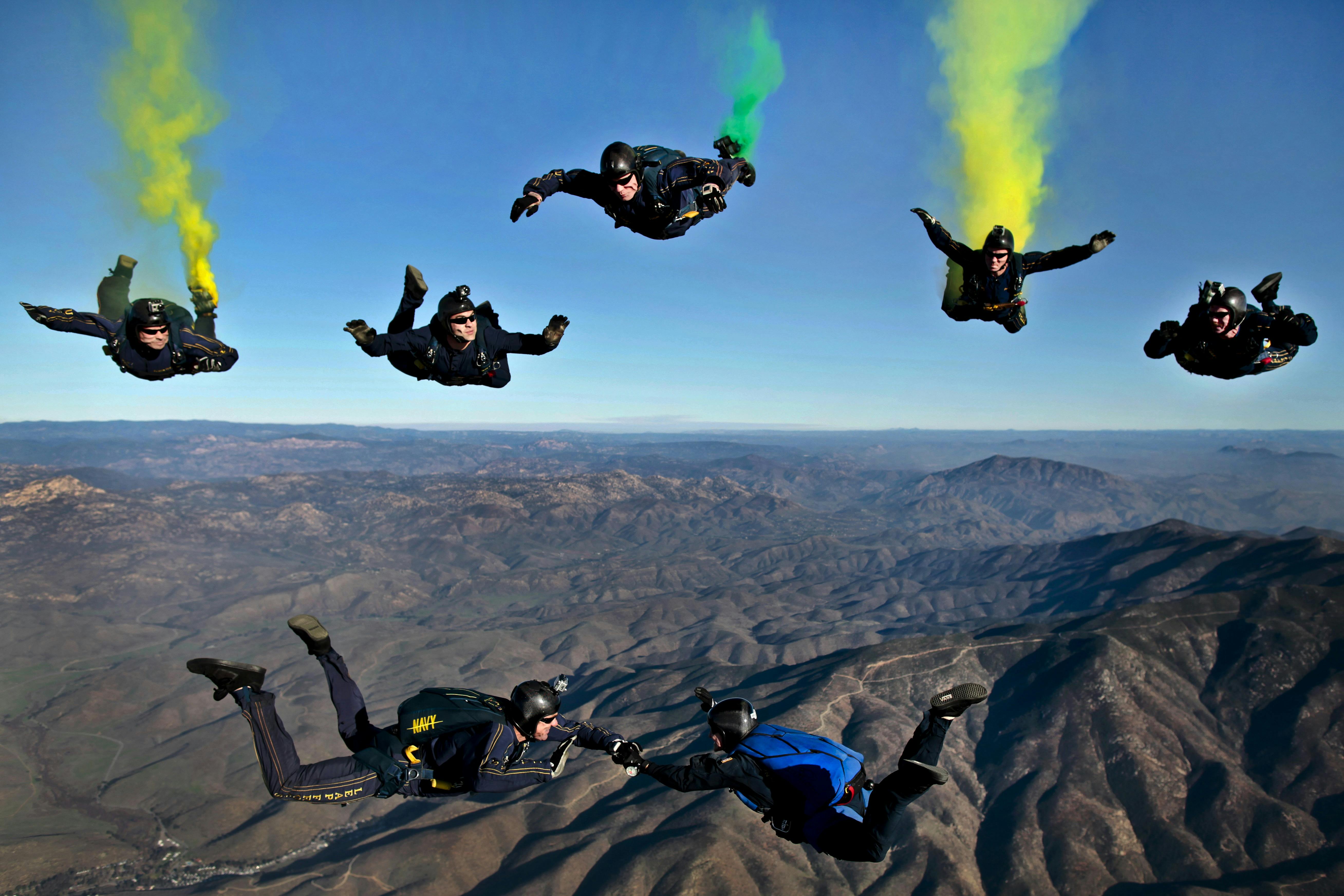
To bring the metaphor home: one of my core beliefs is that speed beats literally every other business metric when building software products. Speed to discover the right things to build, speed of execution, speed to market, speed to pivot when experiments go wrong. Good tech companies have already accelerated to terminal velocity. The best companies have found ways to pull in their limbs and decrease the drag to reach even higher speeds. Excellent leaders always find ways to decrease that drag as much as possible.
Reaching such a flow state with your organisation - where things mesh like clockwork, where roles and responsibilities start to blend and teams have a singular focus - is probably the most fun you can have working in tech.
This blog aims to be a collection of posts, essays, personal experiences and active learning on this and related topics. And since it needs to be stressed these days — it is written by a human. Hope to see you around.
Matthias
(PS: This blog migrated away from my old Substack. Some of the early posts will be from my archive.)